
How Anaheim Residents Are Found
No single record answers every question. A good Anaheim resident search matches each query to the right source. The Assessor ties a parcel to its assessed value and exemptions. But its free online result hides the owner name. The Clerk-Recorder's index reaches back to 1982. It can surface a named grantor or grantee, though it shows no image. The county voter tool serves one voter checking a registration rather than a street list. City directories, court indexes, licenses, and historical sources cover the rest.
Ownership and occupancy are different facts. A deed names the parties to an instrument. A street directory records one household at one moment. A court result names a party to a case, not a current address. The strongest match pairs a name with a second anchor. That anchor can be an old address, a date, a relative, a parcel, a business, or a case number.
- Start with the clue in hand. Use the name for a court, license, business, or unclaimed-property search; use the address for GIS and tax research.
- Resolve an address to an APN and legal description in Anaheim Property Info or the county tax search.
- Compare the owner, mailing address, deed parties, dates, and parcel details rather than treating one field as proof of residence.
- Move to the Orange County court, vital, voter, or business custodian when the question is about a person rather than a parcel.
- Use the Heritage Center, Archives, newspaper, directory, and census trail for an older Anaheim household.
Anaheim Records Offices Behind the Trail
Anaheim lies in Orange County. Because of that, the trail for property and identity records crosses city and county lines. Municipal material includes council actions, permits, plans, code files, and records requests. It belongs to the City Clerk. Recorded instruments and vital certificates sit with the Orange County Clerk-Recorder. The Assessor keeps the parcel and value rolls. The Registrar of Voters controls the voter file. Anaheim has no separate municipal court of its own. So its cases go to the Superior Court.
Orange County Clerk-Recorder
North County branch
222 S. Harbor Blvd., Anaheim
(714) 834-2500
Orange County Assessor
Assessment roll and parcel maps
500 S. Main St., Orange
(714) 834-2727
Orange County Registrar of Voters
Individual registration status
1300 S. Grand Ave., Santa Ana
County office
The Anaheim City Clerk works from 200 S. Anaheim Boulevard, Room 217. The public portal is the natural first stop. Every office answers a different slice of an Anaheim resident records question. The custodian matters as much as the search term.
Note: The county seat is Santa Ana, but the North County Clerk-Recorder branch gives Anaheim researchers a local counter for many services.
Anaheim Property Search Starts with an APN
Start with Anaheim's official parcel map or the Treasurer-Tax Collector address lookup. Do this rather than a name. Write down the APN, situs address, legal description, ZIP, annexation date, and map context. The APN is the bridge between the map and the county roll. It also separates two people who share a name. That matters once the RecorderWorks index comes into play.
The Assessor's free secured-value form demands an eight-digit APN and offers no name search. Its result reflects the most recent annual roll closure, January 1, 2026. It omits the owner's name. Fuller roll information waits at the counter or through a written request. A value notice can split the property address from the owner's mailing address. It also adds land, improvement, exemption, and base-year fields.
Search fields: the secured-value form takes an eight-digit APN and a submit action. There is no owner-name field. Anaheim GIS or tax autocomplete handles the address-to-APN step first.
The county's Assessor information spells out the public route. A parcel is land, not a roster of residents. Keep that limit in view whenever a property search drifts into a resident lookup.
For a visual starting point, turn to the Anaheim City Clerk records page. It shows how city records and linked permit systems sit beside the county property trail.
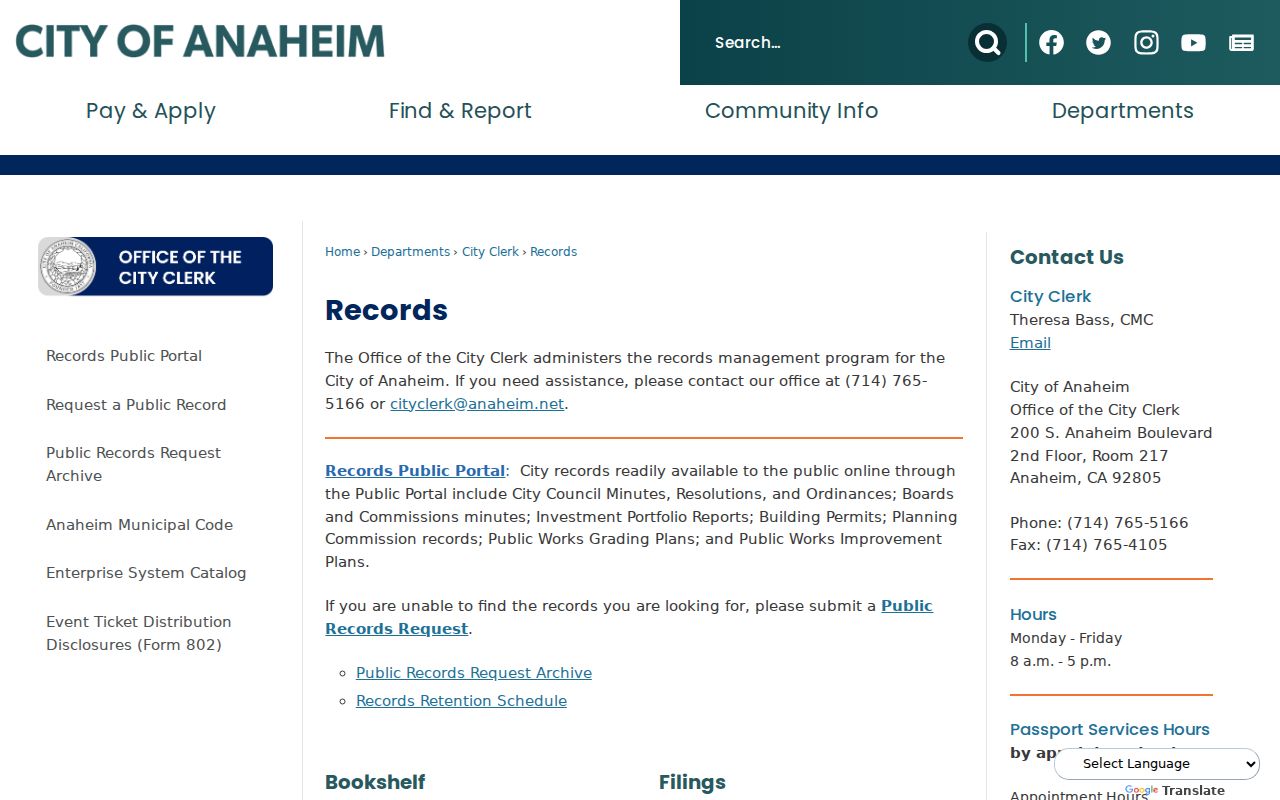
The City Clerk view surfaces municipal names, applicants, and project records. It still cannot replace an assessor roll or a deed record.
Anaheim Recorder Index Has a Clear Boundary
Orange County RecorderWorks is a free grantor-grantee index covering instruments recorded from 1982 forward. It searches by person or business name. It also covers APN, legal description, document number, book and page, dates, map types, and document types. The web result gives a document number, party role, type, date, and related indexed names. It does not display the recorded image.
Search in the right role. Use Grantee to find the deed by which a current owner acquired the parcel. Then take that deed's grantor and search the grantor as a prior grantee. For anything before 1982, work from book and page references. Ask the Archives or a Clerk-Recorder counter about the bridge. The county will not run the search by phone, mail, or counter. The instrument number must come first.
- Index
- A searchable pointer to a record, not the full recorded page.
- Grantor
- The party transferring or giving an interest in an instrument.
- Grantee
- The party receiving an interest in an instrument.
- Parcel
- A mapped piece of land identified by an APN and legal description.
Run the search in the Orange County Grantor/Grantee Index. Order the regular or certified copy separately. The Orange County Clerk-Recorder supplies the official copy route. Online images are not part of the public result.
The Clerk-Recorder image stands for the county custodian behind the index. Save any search result with its recording year, serial number, party role, date, and document type.
Note: A document number beginning with the recording year helps the county locate a 1982-or-later copy, while older research depends on book and page references.
Search Anaheim City Records Before Requesting Them
Anaheim keeps much of its municipal paper trail in one place. The Records Public Portal covers City Council minutes, ordinances, resolutions, boards and commissions, Planning Commission files, and building permits. It also holds Public Works grading and improvement plans plus linked code-enforcement systems. Search logic differs by collection. A date, document title, permit number, project number, or address usually beats a broad phrase.
Files that never made it online still have a route. The City Clerk's public-record request form is the fallback for any non-exempt document. It asks for a name, date, contact details, and a focused description. You also pick delivery by inspection, pickup, or mail. Send it to recordsrequest@anaheim.net, fax (714) 765-4105, mail, or the City Clerk counter. Inspection takes an appointment. One quirk worth knowing: a request itself becomes a public record.
| Portal field or control | Type | Required | Options or notes |
|---|---|---|---|
| Repository/category tiles | Browse links | No | City Clerk, Public Works, Planning Commission, Building Division, and linked systems. |
| Search | Text | No | Use dates, title or number, address, permit, or plan identifiers within the selected series. |
| City Council and boards | Folder browse | No | Minutes, ordinances, resolutions, action agendas, and commission records. |
| Building and improvement plans | Linked search | No | Search building permits, grading plans, improvement plans by type, or all improvement plans. |
| Code Enforcement Complaints | External link | No | Leads to the city's code-enforcement channel rather than the repository. |
The Anaheim Records Public Portal fills a gap. County rolls leave that gap open. A permit or council file can name the applicant or contractor tied to a parcel. That is a connection, not proof anyone lived there. Treat it as context for an Anaheim residents directory search, not as an address itself.
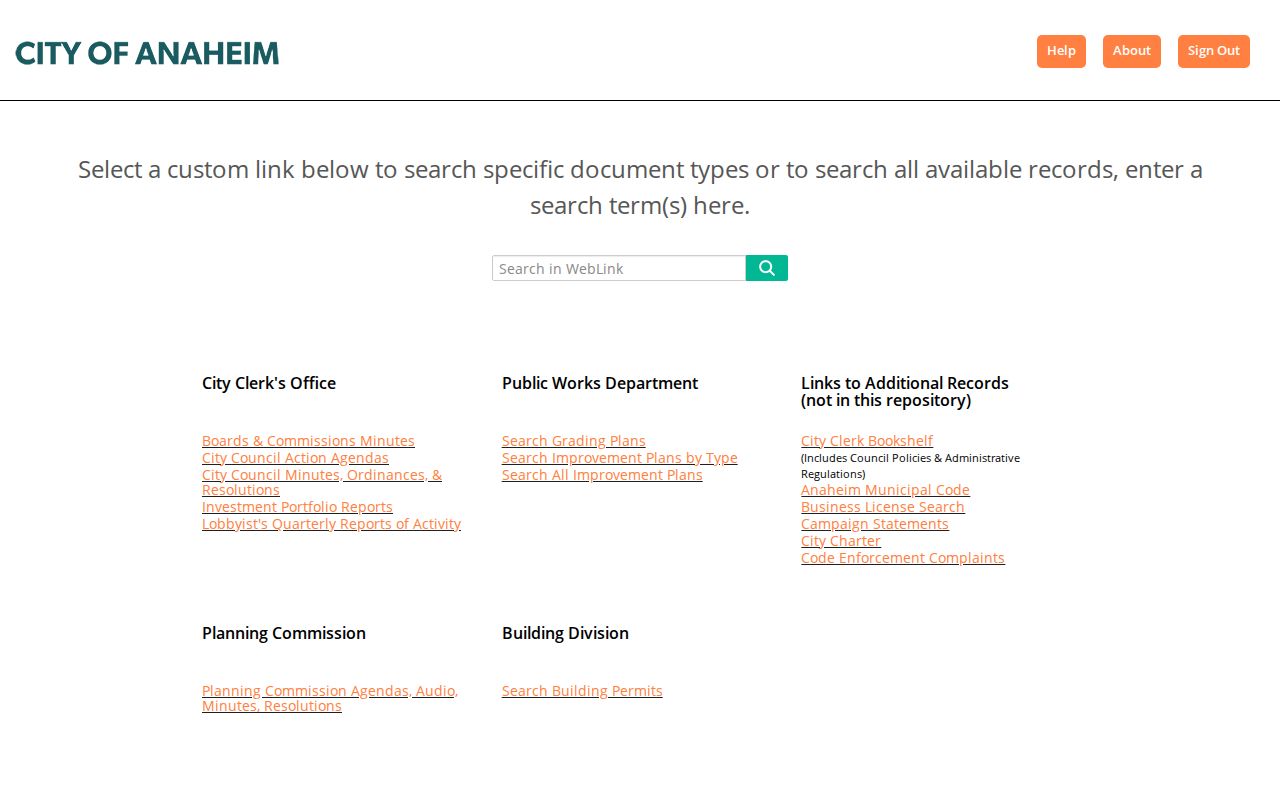
Name the exact record series before filing, so staff retrieve the right file the first time.
When Anaheim's Ten-Day CPRA Clock Starts
California's Public Records Act sets the clock. Government Code section 7922.535 gives an agency ten calendar days to decide whether it holds the requested records and to notify the requester. That deadline governs the determination only. Copies may follow later. Unusual circumstances can stretch the determination by up to fourteen days.
Focus makes everything faster. Give the custodian, record type, address or project number, and time period. Ask to inspect when reading beats copying. Anaheim's form allows inspection, pickup, or mail, with duplication and mailing costs possible and copies withheld until payment. Code Enforcement lists a ten-working-day reply plus per-page fees of $0.15 monochrome and $0.20 color.
Request tip. Search permits, plans, minutes, and linked systems first. A permit number or project identifier can turn a vague request into a defined existing record.
The official CPRA determination provision sets the clock for how fast a city must answer, and Anaheim handles requests through its own city channel. The law opens public records. It does not unlock private data that another statute shields.
Current Anaheim Resident Sources and Limits
Plenty of Anaheim sources look directory-like at first glance. Each one lists a different kind of connection. The property roll centers on owners and parcels. The voter tool verifies a single registration. RecorderWorks indexes parties to recorded instruments. A city staff directory names public roles rather than private homes. Business and license systems show affiliations or public business addresses. Helpful leads, all of them, but none is a single current Anaheim residents directory.
| Source | Connection shown | Keeper | Access |
|---|---|---|---|
| Assessed value and roll | Parcel, value, exemption, owner and mailing fields in fuller roll | Orange County Assessor | APN web result; counter or written route for fuller data |
| Voter status | An individual registration and polling information | Orange County Registrar | Self-lookup; full file requires a qualified purpose |
| RecorderWorks | Grantor, grantee, instrument type and recording date | Orange County Clerk-Recorder | Free index from 1982; copies separate |
| Business or license search | Entity, license, address, role, or status | California and Anaheim offices | Free online indexes with source limits |
| Historical directories | Listed name and address at a past time | Heritage Center and digital archive | Free digital search or reading-room help |
Hunting one person? An Anaheim resident lookup works best when it compares at least two independent records. Chasing a whole street is different. The parcel and permit trail belongs in a street-by-street workflow, not a name-only search.
Match an Anaheim Name Across Independent Records
Same-name traps are everywhere when an index offers only a surname and first name. Try initials. Test married names, maiden names, hyphenated forms, and multi-surname order. Anchor the person with an old address, parcel, relative, age, occupation, business entity, or court number. A deed chain ties a name to land, and a court or license record tests whether the dates and role fit one human being.
Know what each source actually proves. The court index shows a party and case activity. A license search shows a professional record. The Secretary of State can reveal an officer, manager, or agent for an entity, and the State Controller's unclaimed-property search may surface a prior city or holder lead, though a claim demands proof. No single one establishes a current home.
| Official trail | Commercial aggregation |
|---|---|
| Named custodian and stated field set | Mixed sources with unclear freshness |
| Search result can be checked against the original office | Summary may omit context or merge names |
| Copies, fees, and access limits are visible | Payment may unlock a report without proving accuracy |
Need a business angle? The California business search exposes entity filings and their public addresses. Treat the filing as an affiliation clue, then go back to the county or city custodian for the record that answers the real question.
The state's official filing pages show entity details and public addresses on screen. That makes business records one of several official ways to test a name without mistaking an affiliation for an occupancy claim.
Orange County Court Names and Case Numbers
Anaheim's court business runs through the Orange County Superior Court. Civil, small claims, criminal, traffic, family, probate, and juvenile matters all land there. The name search takes a person or business name, a case category, and a search control. But the online name search is paid and requires enrollment. Case-number lookup stays free. Results can include the case number, title, filing date, court location, party names and roles, status, hearings, judicial officer, disposition, and document list. All of it stays subject to confidentiality rules.
When an index match matters, request the official record from the court. You can also request a certified copy. Older indexes sit at justice centers even though records date from 1889 forward. Central Justice Center computers open many unlimited civil files. Limited, small-claims, and family records carry different local or remote rules. Adoption, juvenile, sealed, and similar confidential material stays closed. Check the Orange County court access page for category and channel details. Do that before paying for any name search.
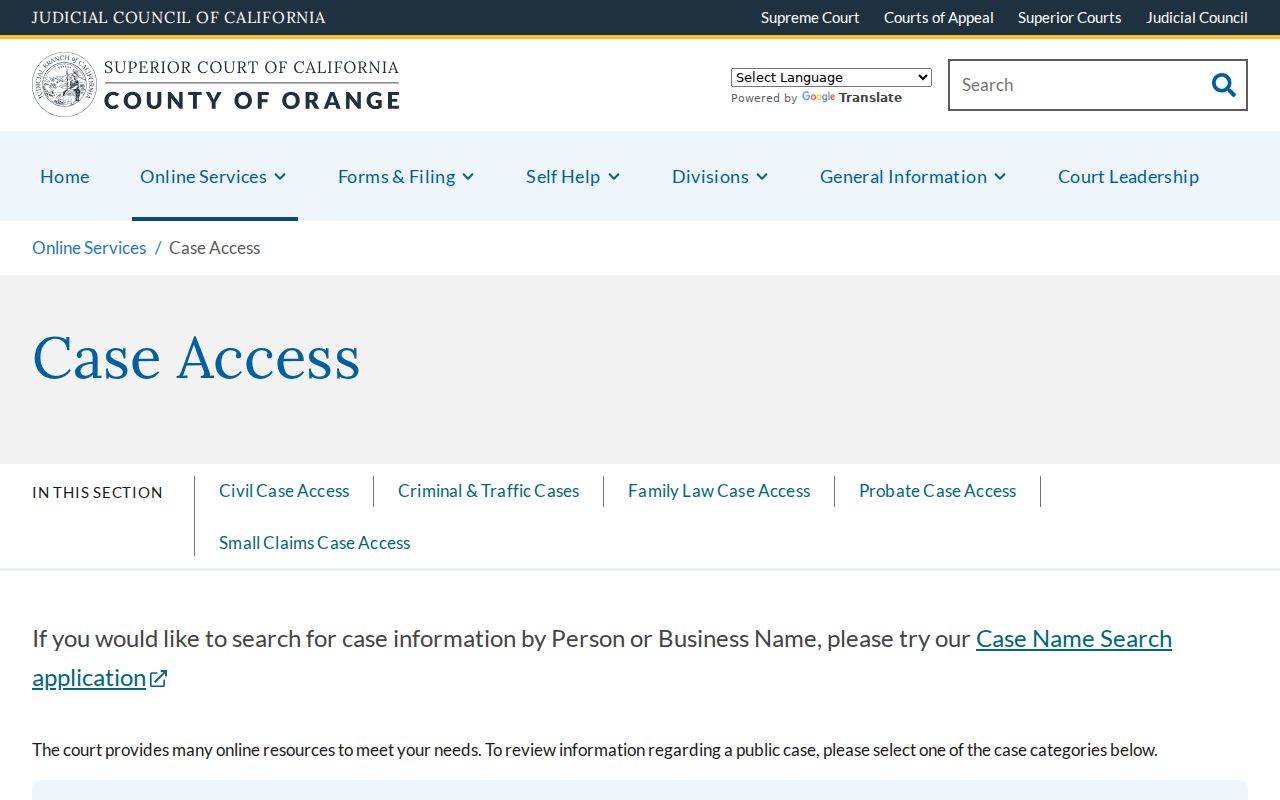
A case number, once known, can save a paid name-search step.
Note: A court party result is a record of court involvement, not a finding that a person currently lives in Anaheim.
Anaheim Vital Records Need the Right Copy
Vital records in Anaheim follow strict rules, and each life event has its own custodian. Orange County issues certificates for births, deaths, and marriages licensed in the county. The California Department of Public Health supplies statewide certificates. It also handles divorce certificates of record for covered years. Access splits in two. An authorized copy goes only to a qualified requester. An informational copy reaches more people. Its marking blocks it from establishing identity.
Confidential marriage records need a spouse or court order. The 2026 state fees are $31 for birth, $26 for death, $19 for marriage, and $18 for a dissolution certificate. The county table lists $34 for a birth copy. It lists $19 for a public marriage copy. Authorized mail requests need a notarized sworn statement. The county form asks for the event place and date. It also asks for names, relationship, contact details, and copy type.
Birth and death: county or state copies can carry identity and family links, subject to the authorized or informational route. Marriage: a public copy follows the county that issued the license. A confidential copy stays restricted. Divorce: a court decree is not a state certificate. Informational copy: it is the broader research path but cannot establish identity.
Use the California vital-records instructions and the county Clerk-Recorder route. No open name index replaces those eligibility rules.
Where Anaheim Historical Residents Appear Online
History is where an Anaheim residents directory shines. The Advantage Preservation collection spans 27,707 scanned pages. Its city directories run from 1872 through 1948. Digital Anaheim adds nearly 2,000 photographs. They are browsable by decade and by themes such as families, neighborhoods, schools, churches, government employees, and businesses. Cemetery records, George Hansen diaries, water-company minutes, and early Los Angeles County directories add names that may never reach a property roll.
The Heritage Center reading room keeps Anaheim and Orange County directories from 1899 to the present. Its shelves also hold local newspapers on microfilm, yearbooks, family papers, church and business ledgers, oral histories, maps, and municipal material. Anaheim once sat in Los Angeles County. Orange County was not created until 1889. That makes the 1872 Los Angeles city and county directory a useful starting point for early residents.
For the fuller shelf map and entry-reading method, turn to the Anaheim city directory collections page, which keeps historical volume work distinct from current parcel and court searches. The California Department of Consumer Affairs license search is a modern complement to the historical shelf. It checks a name against a public role.
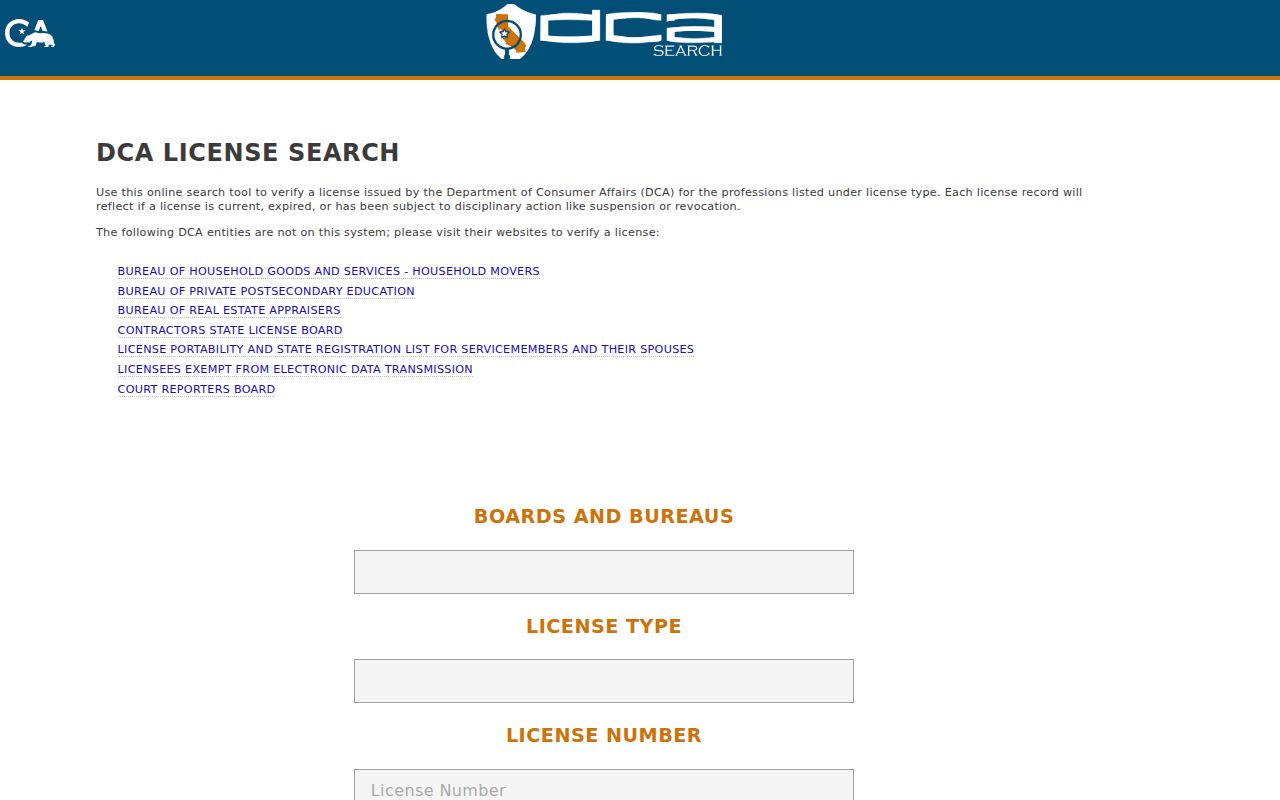
A directory or newspaper adds the older address context.
Protected Addresses and Anaheim Lawful Search Limits
Some Anaheim residents stay hidden on purpose. California's Safe at Home program gives eligible people facing safety risks a substitute address and confidential voting. Elections Code section 2194 limits voter record use. The federal Driver's Privacy Protection Act restricts DMV data. Utility customer lists and a full household roster are not public Anaheim sources.
Public records can support family history, an heir search, reconnecting with a former classmate, civic research, or a property question. They must never be used to watch, threaten, stalk, harass, or intimidate a person. Sealed or protected records mark a boundary. Stop at the custodian's line.
Lawful use. Anaheim records are for lawful personal research and public accountability. Misuse of personal information to stalk, harass, or harm someone can violate California criminal and civil law.
Read the California Safe at Home program notice before publishing or repeating a protected address. A missing result is often a safeguard, not an error.
Recent Orange County Records Access Changes
Orange County's record trail keeps shifting. The Clerk-Recorder says electronic recording delivery began in 1997, joined the SECURE multi-county system in 2008, and passed 11 million electronically submitted documents by August 2025. That growth changed how papers reach the office. Faster intake does not make every document image free online. RecorderWorks remains an index and copy-order path.
A spring 2025 budget report describes Clerk-Recorder On Wheels, a new mobile service for clerk, recorder, and Archives transactions. Check schedules and available services before relying on it. The county also keeps sending real-property fraud courtesy notices that alert owners when a title-affecting document is recorded. It is a warning channel, not a guarantee.
The Orange County voter status tool shows the same principle at work in elections. A public access point can be useful while staying limited to a defined purpose and field set. Access and limits travel together.
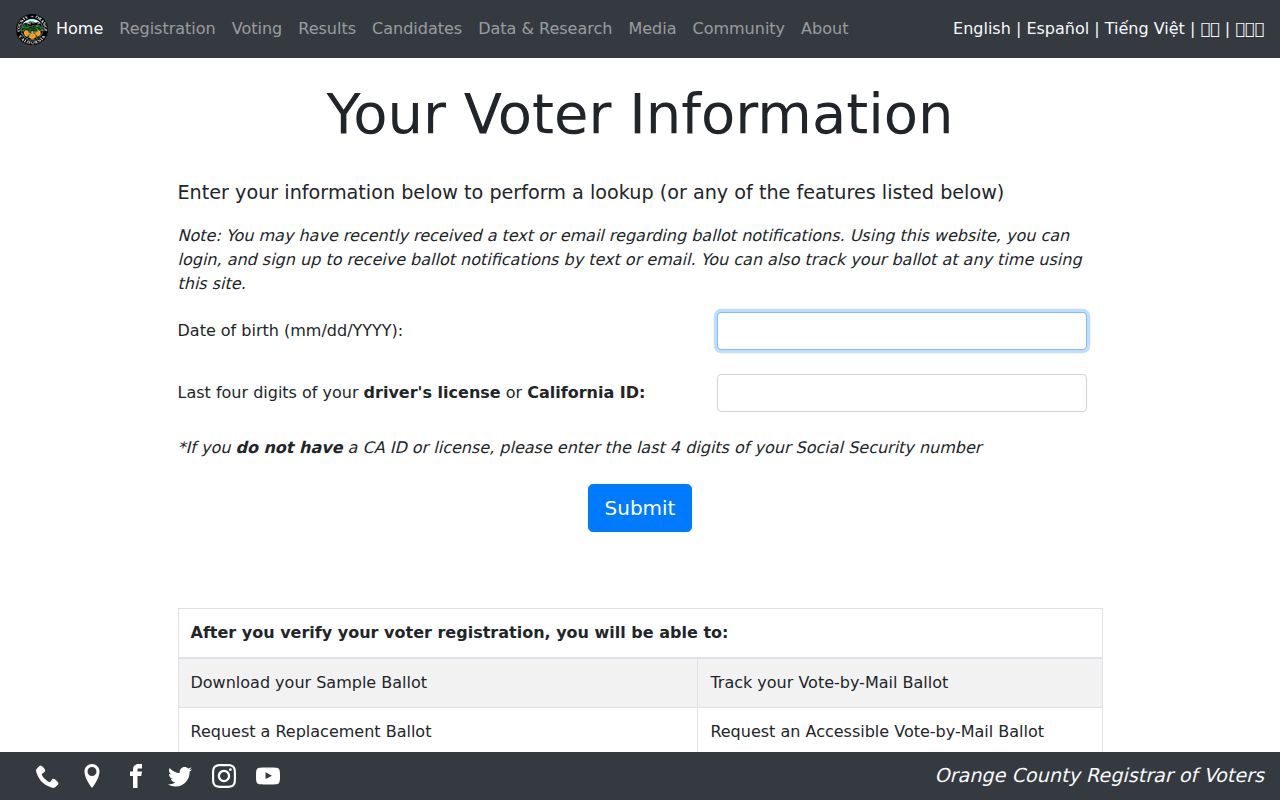
The voter tool's fields serve one defined purpose.
Historical Anaheim Resident Directories
A single directory year carries surprising weight. It can pin a named household to an address. It can list an occupation or business, mark a widow, and hint at a move. It cannot prove every person who ever lived at that address. Begin with the free digitized collection covering 1872 through 1948. Then compare nearby years and read the scan itself rather than trusting OCR. The Heritage Center keeps a shelf running from 1899 to the present. It also holds newspapers, yearbooks, cemetery material, family papers, and oral histories that fill the gaps a street directory leaves open.
Anaheim's record history adds a geography check few first-time researchers expect. Before 1889, the county system that mattered was Los Angeles County. Street names have shifted too. Center became Lincoln Avenue, and Los Angeles Street became Anaheim Boulevard. Pacifico Street turned into Gene Autry Way in 1991. Search both old and current names. That habit keeps a historical residents directory from losing a household at a name change.
County records, city records, parcel data, court files, and local collections work best together. That combination turns a broad Anaheim residents directory question into a documented trail. Each result should keep its custodian, date, search field, and limit attached. The next researcher can then test what you found.
Visit Anaheim's digitized directory collection for a first historical pass. Compare it with the physical resources at the Heritage Center. The historical shelf meets modern municipal sources whenever you check a directory address against a current custodian.
Treat each source as a prompt. Then verify the underlying record where it lives. That is the discipline that makes a resident lookup hold up.