
Anaheim's Digitized City Directory Years
The strongest online starting point is Anaheim Public Library's Advantage Preservation collection. Its city-directory title spans 1872-1948 and 27,707 scanned pages. The search prompt accepts people, places, and events, with additional terms, Boolean controls, dates, title browse, and decade browse. A result is a page lead. The scan, not the OCR text alone, is the evidence.
The physical shelf is wider. Anaheim's 2025 Historic Preservation Workshop identifies Anaheim and Orange County directories from 1899 to the present at the Heritage Center. Individual publishers and every volume year are not exposed on the landing pages, so staff confirmation matters when a search depends on a specific missing year.
| Collection | Years | Where held | Access and value |
|---|---|---|---|
| Digitized city directories | 1872-1948; 27,707 pages | Advantage Preservation | Free OCR search and page images |
| Anaheim and Orange County shelf | 1899-present | Heritage Center | Reading room; call for exact volumes |
| First Los Angeles city and county directories | 1872; 216 pages | Digital archive | Early county context for Anaheim |
| Anaheim Gazette | 1870-1964 | Heritage Center microfilm | Addresses, notices, deaths, businesses |
| Anaheim Bulletin | 1923-1995 microfilm | Heritage Center | Obituary and address corroboration |
| Orange County Plain Dealer | 1919-1925 | Heritage Center microfilm | Interwar name coverage |
| Yearbooks and cemetery records | Exact school years vary; cemetery 1903-1927 digitized | Heritage Center and digital archive | School and burial context |
The coverage table keeps a city directory distinct from a modern resident list. A volume records who was listed in that edition, not every person who lived in Anaheim at the time.
Search Anaheim City Directories Online First
The digitized viewer can be searched by a surname, a place, or an event phrase. Try a plain surname first, then a street term, business name, or neighborhood clue. Add dates only after seeing how the title indexes the run. German names and older type can produce OCR errors, especially in early Anaheim material connected to the Vineyard Society.
Open the page image for every useful hit. Note the volume title, year, page, printed spelling, street, and any abbreviation key. Search nearby years for a move, a first appearance, a changed occupation, or a widow notation. If the viewer returns no result, the absence may reflect OCR, an unscanned year, a changed surname, or a physical-only volume.
The Advantage Preservation city directory archive is the online shelf. Use it as a locator, then ask Heritage Services staff about the physical run when the timeline has a gap.
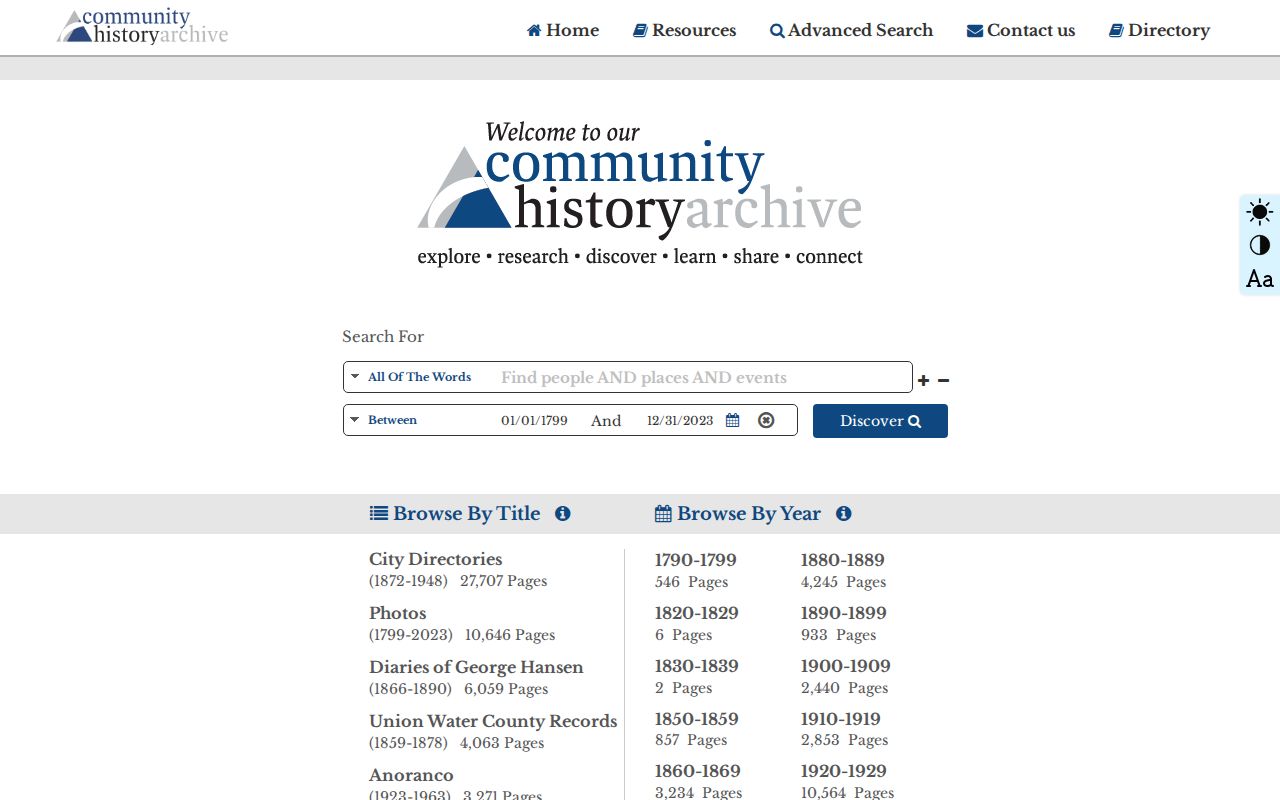
The digitized archive image represents a free search route, but the scanned page remains the source to transcribe.
The Anaheim Heritage Center Directory Shelf
The Anaheim Heritage Center is the main local-history reading room. It is at the Muzeo complex, 241 S. Anaheim Boulevard, and the city lists Heritage Services hours as Monday through Friday, 11 a.m. to 6 p.m. Heritage Services Manager Jane K. Newell can be reached at (714) 765-6453. Staff help matters because the landing pages do not list every publisher, reverse volume, tax book, or Sanborn sheet.
The shelf sits beside local newspapers, maps, municipal documents, family papers, business and church ledgers, oral-history transcripts, yearbooks, cemetery microfilm, and photographs. A city directory entry that only supplies a surname can gain meaning from a newspaper notice or a school yearbook. The collection also includes pre-1889 Los Angeles County material because Anaheim belonged to that county before Orange County was formed.
Read the Anaheim Heritage Center holdings information before a visit. Exact volume availability should be confirmed with staff rather than assumed from a broad collection description.
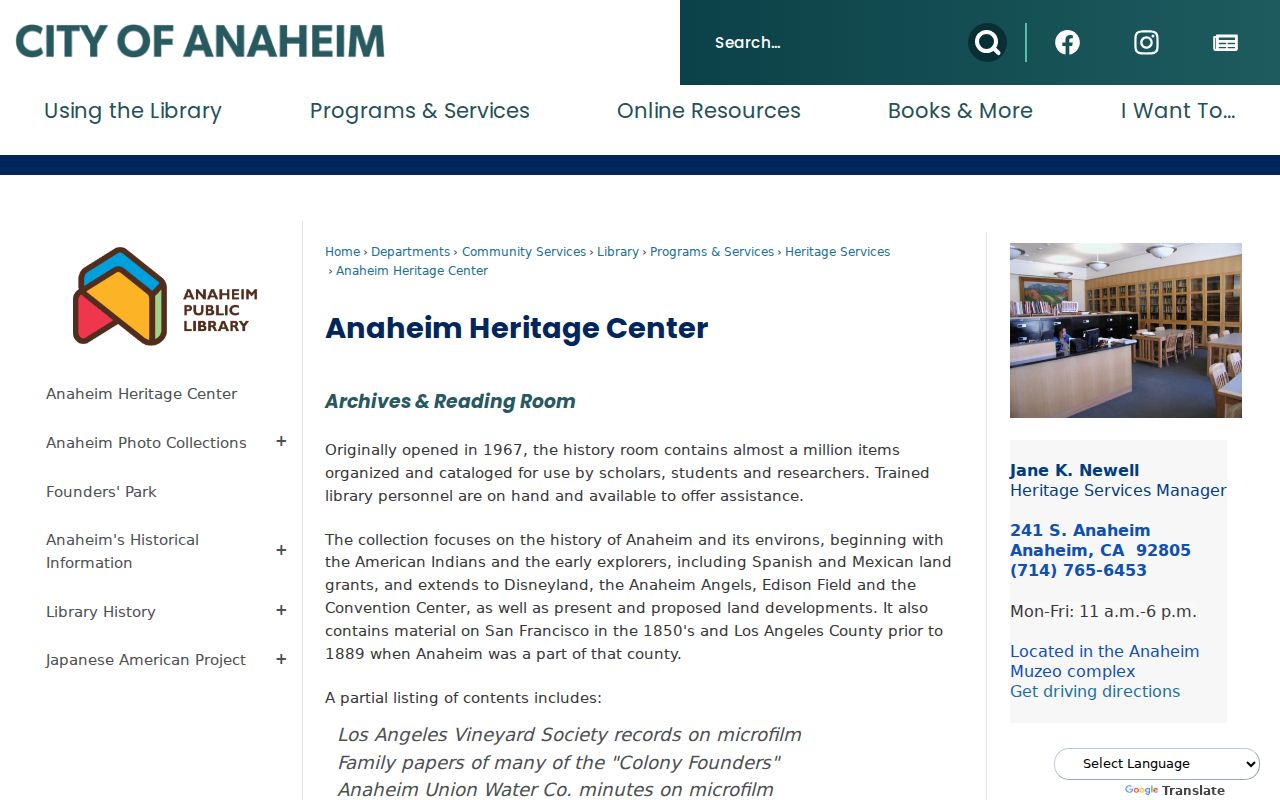
The Heritage Center image points to the reading-room route, where the printed city directory and its companion collections can be read together.
Why Anaheim's 1872 Directory Matters
Anaheim began as a German farming and vineyard colony in 1857. Orange County did not open until August 1, 1889. Before that change, Anaheim records belonged to Los Angeles County systems. That is why the first Los Angeles City and County Directories title from 1872 can contain Anaheim people even though the modern searcher expects an Orange County source.
Use the county boundary as a search switch. For an early person, look at the 1872 directory, Vineyard Society minutes from 1857, Union Water Company records from 1859-1878, and George Hansen diaries from 1866-1890. Then move to Orange County Archives material from 1889 forward. This preserves the record geography instead of treating a present county name as timeless.
- 1857 - Anaheim Colony and Vineyard Society records begin.
- 1872 - The first Los Angeles city and county directory title provides an early name source.
- 1889 - Orange County opens and county custody changes.
- 1899-present - The Heritage Center reports an Anaheim and Orange County directory shelf.
Note: A pre-1889 Anaheim result may require Los Angeles County or state-era research before an Orange County index can help.
Reading an Anaheim City Directory Entry
No single named entry was inspected in the research environment, so a sample person should not be invented. Volume conventions vary. Open the exact scan, find its abbreviation key, and write down only the fields that the volume actually prints. Common fields to check are the surname and given name or initial, spouse in parentheses, occupation or business, home and business addresses, widow notation, and short marks such as h, r, or emp.
A city directory is a snapshot. A name may be listed at a house, a business, a boarding address, or a professional location. The fact that a book includes an occupation does not prove that the person lived at the business address. Compare the address with a deed, tax clue, newspaper, census, or family collection before treating the entry as a household match.
- Criss-cross directory
- A street-order section that lets an address lead to a listed name.
- Householder index
- A name-oriented list that points to a household or address entry.
- Abbreviation key
- The volume's own guide to marks for home, room, business, widowhood, or other status.
- OCR
- Machine-read text that helps find a scan but can misread names and type.
Follow a Household Across Anaheim Directory Years
Choose a surname and a likely address, then compare adjacent available years. Record every adult name, address, occupation or business, spouse mark, and change in street wording. A first appearance may mark a move into Anaheim. A changed address may show a move within the city. A disappearance can mean a move, death, a spelling shift, an unscanned year, or a change in listing practice.
- Search the surname in the digitized 1872-1948 collection and transcribe from the page scan.
- Check the exact volume's abbreviation key before interpreting a short mark.
- Repeat in adjacent years and keep the address, business, and family fields in separate notes.
- Compare the household with a released census, newspaper, deed, permit, yearbook, or cemetery clue.
- Resolve same-name people with a second anchor before joining two entries.
Where a reverse section exists, search the address as well as the surname. This can reveal a listed household that is missing from a name index or spell a family name in a different way.
Pair Anaheim City Directories with Census Years
Federal population censuses are released under a 72-year rule. As of 2026, the 1950 census is the newest public population census. City directories bridge the ten-year gaps between census snapshots. A directory can show a move or address change near a census year, while the census can show a household composition at its enumeration date.
Use the National Archives census guidance for the public release framework, then compare the census household with Anaheim directory entries, local newspapers, and the parcel trail. Do not force a match when an address or age conflicts. A directory can list a boarder, business, or absent householder differently from a census schedule.
Start with the National Archives census research route when a directory clue needs a ten-year household check.
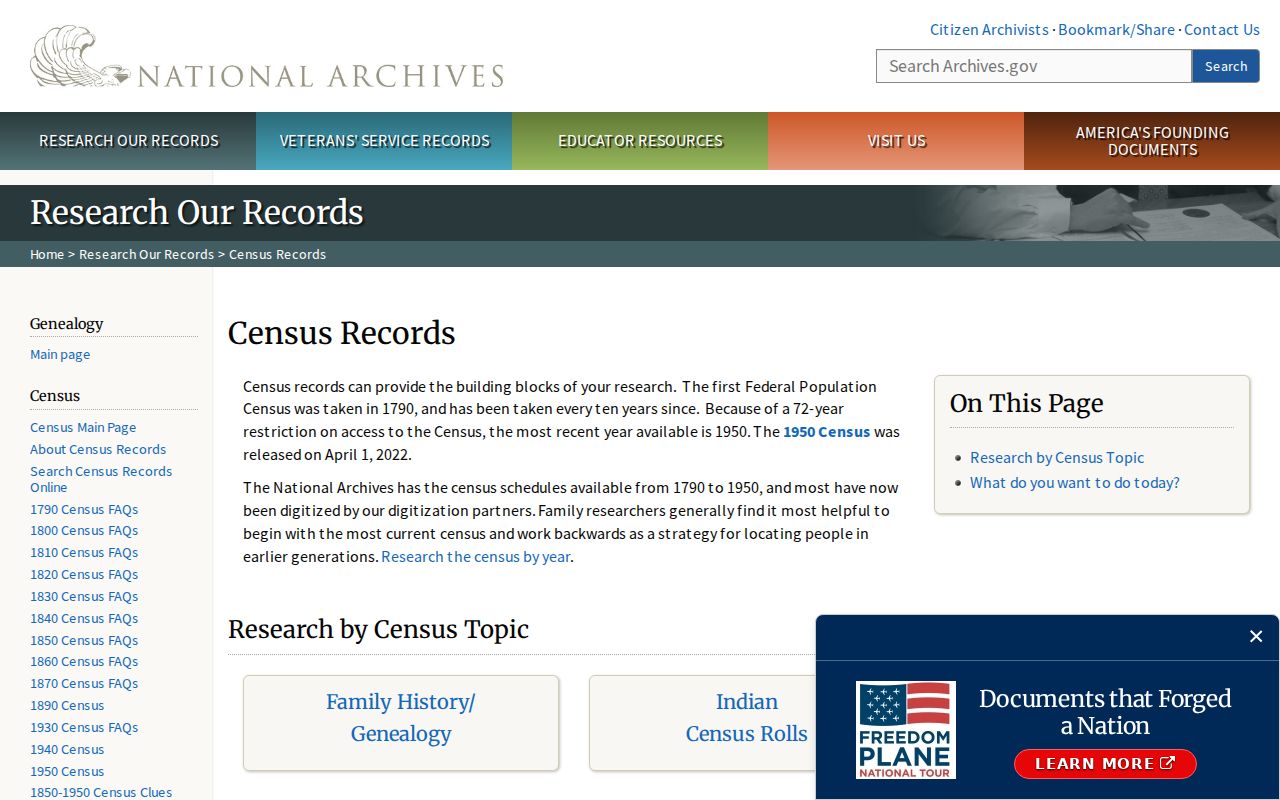
The census image marks a companion source. It does not replace the local directory page or the scan-level check.
Reverse Directories Turn Anaheim Addresses into Names
A reverse or criss-cross city directory is the historical counterpart to a modern address search. Start with an address, read the street-order entries, and record the listed occupant or business. The result can support a house history, a past-resident search, or a family connection. It remains a time-bound listing, not a complete occupancy record.
Because exact reverse-directory years are not published in the sources reviewed, ask the Heritage Center for the volume and page range. Bring the address, old and modern street names, and any parcel or tract clue. Center Street is now Lincoln Avenue, Los Angeles Street is now Anaheim Boulevard, and Pacifico Street became Gene Autry Way in 1991. Historical names can be the key to the right page.
The modern address chain is handled on the Anaheim street directory page. The city directory remains the place to interpret the historical book itself.
Anaheim Newspapers Fill Directory Gaps
Anaheim Gazette microfilm runs from 1870 to 1964. The Anaheim Bulletin runs from 1923 to 1995 on microfilm, with a shorter Newspapers.com span, and the Orange County Plain Dealer covers 1919-1925. These newspapers can add an obituary, address notice, marriage, business change, club item, or sale notice where a directory has a blank year.
Search the surname, street, business, spouse, and nearby institution. A newspaper item is strongest when the date, address, and relationship fit a directory or census entry. Digital Anaheim photographs and oral histories can add place and family context, while cemetery records can test a death or burial clue.
Note: Newspaper and directory runs differ by format, so confirm whether a requested year is on microfilm, in a licensed database, or only in a physical collection.
The Anaheim Public Library overview identifies the library system and its local-history role before a reading-room visit.
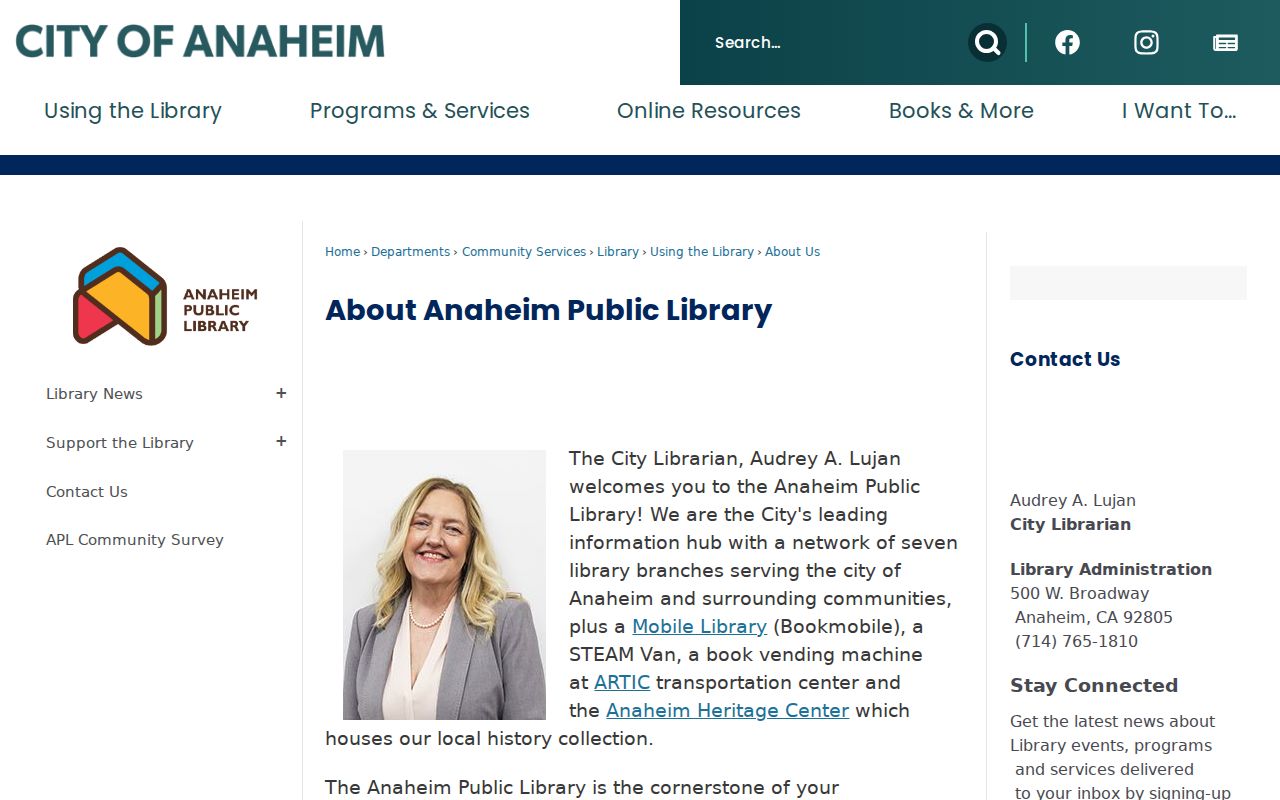
The library overview image points to the broader Anaheim Public Library network that supports local-history research beyond one directory run.
Anaheim Yearbooks, Cemetery Records, and Oral Histories
When the question concerns a former classmate, teacher, club, or family, the Heritage Center's Anaheim Union High School District yearbooks can supply a school-year anchor. Exact school and year holdings are not posted, so call before a visit. Cemetery records, church and business ledgers, family papers, biography files, and oral histories can identify people who never appear as property owners.
Digital Anaheim adds nearly 2,000 photographs from the 1850s through the 1990s, with themes for families, neighborhoods and houses, schools and churches, government employees, agriculture, and business. The Bullard family collection covers diaries and ledgers from 1870-1933. The Hirahara collection connects four generations since 1909 with Anaheim and Heart Mountain photographs. These are context sources, not a public resident roll.
Use the Digital Anaheim collection to test names, places, and eras, then compare any identification with the original image description and another record.
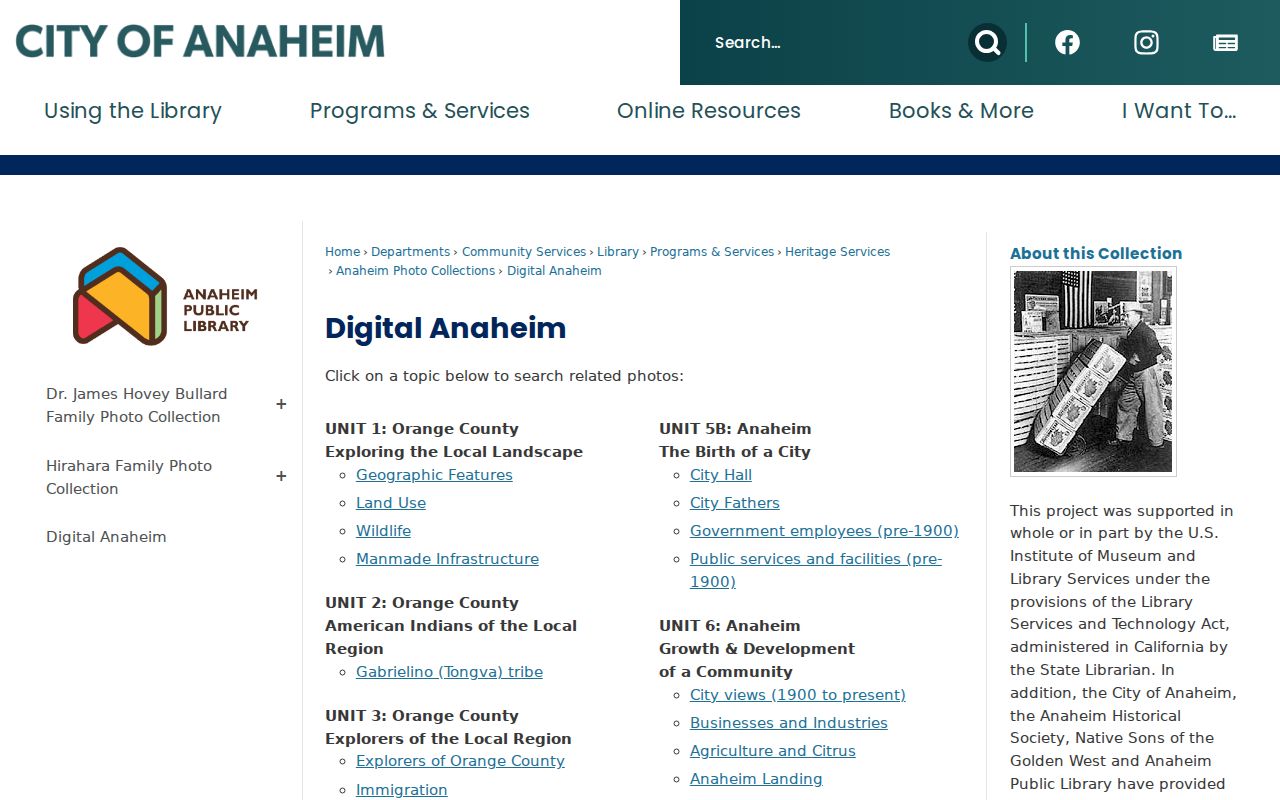
The Digital Anaheim image shows the visual layer that can make a directory name meaningful without overstating what the photograph proves.
OCR Is a Lead, Not a Transcription
Optical character recognition can turn a scanned city directory into a fast search field, but it may split a surname, confuse an initial, or misread German handwriting. Search spelling variants and nearby words. When a result matters, open the scan and copy the printed line. Record the page, title, year, and the volume's own key.
The same care applies to a no-result screen. Test a partial surname, a street term, a business, or a date range. Then ask the Heritage Center whether the needed year is on the shelf. An incomplete digital hit is not proof that an Anaheim resident was absent from the city directory.
Research habit. Preserve both the OCR search phrase and the printed spelling. That small record makes later name-variant checks much easier.
Historical Anaheim city directories work best when they are paired with census, newspaper, parcel, and family evidence. A listed address is a lead to verify, not an invitation to infer facts the book does not state.